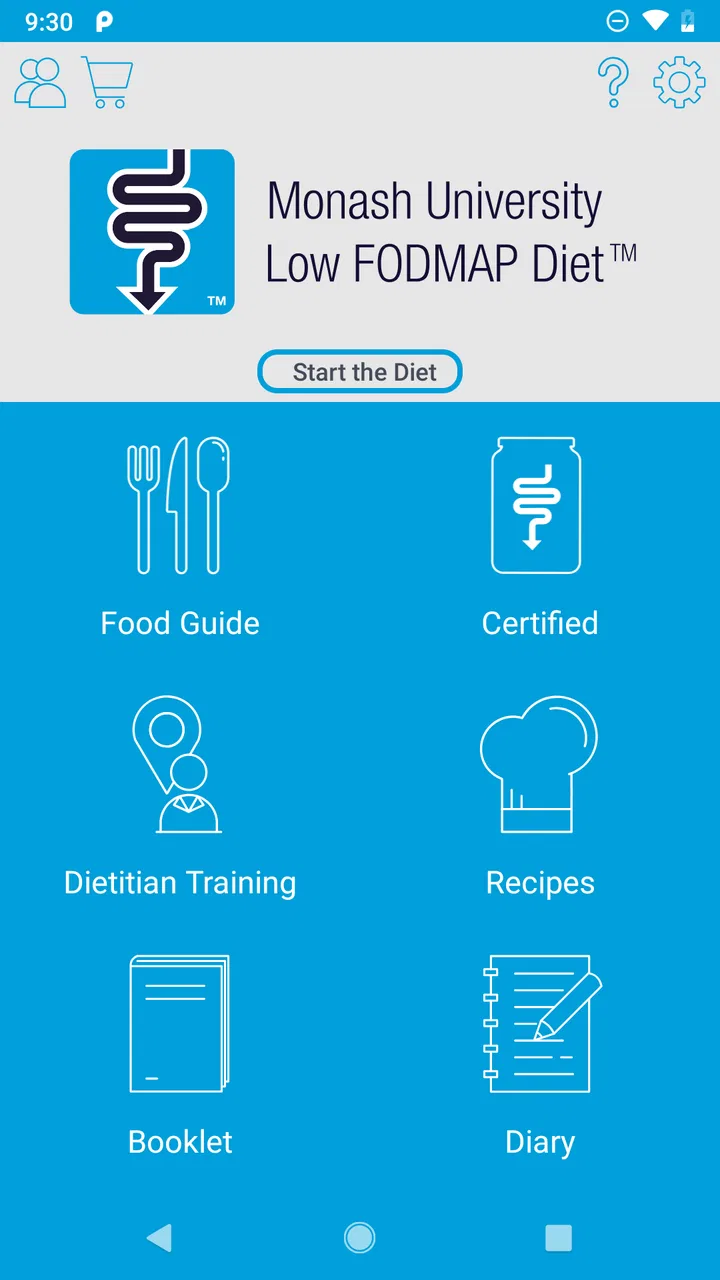
Monash University FODMAP diet
- 4.3
- Rating
- 500.00K
- Installs
- $9.00
- Price

 Analysis by App-foxy
I found Monash University FODMAP diet most useful as a practical reference when I was trying to make sense of low-FODMAP eating in ordinary situations rather than reading about the diet in theory. It is a medical app from the Monash University Low FODMAP diet team, and its purpose is focused: helping you identify foods and make more informed choices while following the Monash University low-FODMAP approach.
That narrow purpose is also its biggest strength. I would not describe it as a full meal-planning service, a symptom diary, or a replacement for a dietitian. Instead, I see it as a pocket guide that can answer the question that comes up repeatedly during shopping, cooking, and eating out: “Is this food likely to fit the approach I am following, and what serving size matters?”
The app costs $9.00, carries an Everyone age rating, and has reached over 500K installs. Its average rating is 4.3 from around 4.4K ratings, with roughly 589 written reviews. Those figures suggest that it has become a familiar tool for people dealing with digestive symptoms, but they do not remove the need to use it thoughtfully. Low-FODMAP eating is personal, and an app cannot interpret every symptom or medical condition for you.
You May Also Like

 Blood Strike: 2.5 Anniversary
Blood Strike’s Loadouts Turn Every Drop Into a Tactical Gamble
A close look at Blood Strike’s custom loadouts: how fast access to signature weapons reshapes its battle royale rhythm, rewards preparation, and narrows the gap between fights.

 Pandora - Music & Podcasts
Pandora’s Music Is Easy to Start, but Harder to Recover
Pandora’s strength is its low-effort path from a seed to a station. Its weak spot is how much confidence it asks you to place in connection, setup, and quiet recovery.

 8 Ball Pool
 Is Built on Rivalries, Rematches, and Routine
A close look at the rivalries, rematches, shared routines, and unanswered safety questions that turn a quick pool match into a persistent mobile community.

 Samsung Music
’s Quiet Strength Is Playing What You Already Own
Its reach comes less from spectacle than from dependable access to a personal library. That simplicity is both the app’s strongest retention engine and its ceiling.

 AccuWeather: Weather Radar
AccuWeather Review: A Quick, Clear Forecast for Everyday Decisions
For everyday plans, the best forecast is the one you can understand quickly. AccuWeather makes rain timing, radar, and local conditions easy to act on, with a few trade-offs.

 Hill Climb Racing
Why Hill Climb Racing Still Turns Crashes Into One More Run
A tiny car, a bumpy hill and one more upgrade: Hill Climb Racing keeps resurfacing because its simple chaos makes every near-miss feel personal.
More From Our News Desk



How the current app fits into real low-FODMAP routines
I use this section to look at how the app can fit around the people, devices, and routines involved in everyday low-FODMAP choices. A useful starting point is deciding whose food decisions the reference is supporting, then agreeing how to share what you learn without treating one person’s tolerance as everyone’s rule.
A focused food reference rather than a general health app
The first thing I noticed is that the app works best when I treat it as a decision-making tool. I might be standing in a supermarket, looking at an unfamiliar ingredient, or checking whether a food I already tolerate appears in the Monash system. The value comes from having the information close at hand instead of relying on a random search result or a broad internet list.
That distinction matters because low-FODMAP guidance is not always as simple as marking foods “good” or “bad.” Serving size can change the answer, and a person’s tolerance can differ from another person’s experience. A reference built around the Monash approach is therefore more useful to me than a generic blog post that presents a permanent blacklist of foods.
I also like that the app is clearly aimed at people who want to follow a specific method, not merely collect recipes labeled “gut friendly.” If you are already working with a clinician or dietitian who uses the Monash University approach, the app can give you a consistent reference between appointments. If you are only curious about digestive health and do not plan to follow this diet, the purchase may feel less worthwhile.
Where it helps during an ordinary day
A realistic use case is a rushed grocery trip after work. I might have a few familiar foods in my basket but pause at a packaged item with several ingredients I do not recognize. Instead of guessing from a social-media chart, I can use the app as a reference and then decide whether the product fits my current stage of eating. That last part is important: the app can inform the choice, but it cannot know my complete meal, symptoms, or medical history.
At home, I find it more useful before cooking than after a meal causes trouble. Checking ingredients while planning gives me a chance to swap one component rather than trying to identify the cause of discomfort later. This makes the app a prevention aid in my routine, even though it is not a diagnostic tool.
It can also be useful when eating with other people. I can check an ingredient or food before ordering rather than turning the whole meal into a long explanation. Still, restaurant portions and preparation methods are difficult to judge precisely, so I would use the information to ask better questions, not to assume a meal is automatically safe.
The practical trade-off behind the $9.00 price
The one-time purchase is easy to understand if you expect to consult the guide regularly. A person beginning the diet may use it several times a day during shopping and meal preparation, which can make the cost feel reasonable compared with repeatedly buying books or trying to sort reliable advice from conflicting online pages.
On the other hand, someone who only wants a short list of foods may not get enough value from it. Free websites and printed handouts can cover basic concepts, especially when a dietitian has already supplied a tailored plan. The app earns its place when you need a portable, dedicated reference and expect to return to it over time.
I would also avoid viewing the price as payment for personal medical advice. It buys access to an app, not an individual assessment. Anyone with severe, persistent, or unexplained symptoms should involve a qualified health professional rather than using food checks as an alternative to care.
What the version history means for people already using it
The current version is 3.3, and the app was released on Nov 6, 2013. That combination tells me this is an established product rather than a newly launched experiment. Its long presence gives existing users a reason to expect a familiar workflow, while the current version indicates that the product has continued to be maintained and refined over time.
For someone upgrading from an older installation, the main benefit is continuity. You are not moving from a simple food reference into an unrelated wellness platform; the central purpose remains recognizable. I would still check the current interface on my own device before relying on it during an important shopping trip, particularly if I had not opened the app for a long time.
The minimum operating-system requirement is iOS 9. That makes the app potentially accessible on older Apple devices, although compatibility alone does not guarantee that every older phone will feel comfortable to use. A small screen, aging battery, or slow performance can matter when you are trying to check information quickly in a store.
I would not interpret version 3.3 as a promise that every part of the low-FODMAP experience has been redesigned recently. The useful question is whether the current reference suits your method and routine. Existing users who already know where they find information should benefit from stability; new users may need a little time to learn how to search and interpret entries without turning the app into a rigid list of forbidden foods.
Three habits that make the app more useful
My first recommendation is to check serving context, not just the food name. A result should be treated as part of a meal decision rather than a universal verdict. I would note the portion I actually eat and consider what else is on the plate, because stacking several questionable choices can make later troubleshooting much harder.
Second, I would use the app before shopping to create a small rotation of dependable ingredients. Instead of checking every item from scratch, I can identify foods that work for my current routine, then use the app for new additions. This reduces decision fatigue and helps separate a genuine problem food from an overly complicated meal.
Third, I would use it alongside a simple personal record rather than expecting it to remember my body’s response. A reference can tell me how a food fits the Monash framework, but only my own careful observations can show whether a particular portion or combination causes difficulty. Keeping those two kinds of information separate prevents me from blaming the app when the real issue is individual tolerance.
A fourth useful habit is to revisit foods during the appropriate stage of the diet instead of treating the initial elimination period as the permanent goal. The app can support checking foods, but it does not replace a structured reintroduction plan. If I were unsure how to progress, I would ask a dietitian rather than simply removing more and more ingredients.
How it compares with common alternatives
Compared with a general search engine, this app is more convenient for a focused low-FODMAP workflow. Online searches often mix professional guidance with personal anecdotes, outdated lists, and advice that does not explain serving context. A dedicated Monash reference gives me a clearer starting point, although I still need to apply judgment.
Compared with a recipe app, it serves a different purpose. Recipe platforms are better when I need inspiration, shopping lists, or step-by-step cooking instructions. This app is better when I already have a meal in mind and need to investigate an ingredient. I would not choose it as my only cooking companion if I expect a large library of complete menus.
Compared with a printed handout, the phone-based format is easier to carry and consult in a shop. A paper list can be calmer and less distracting, and it may be enough for a person who has already memorized the basics. The app becomes more attractive when I am still learning, encounter unfamiliar foods, or want one dedicated reference rather than several pages in a folder.
Compared with a symptom-tracking app, it answers a different question. A tracker can help identify patterns over time, while this guide helps me make food choices within the Monash framework. Using only one of them leaves a gap: food information without personal observation can become too theoretical, while symptom notes without reliable food guidance can be difficult to interpret.
Where the experience still has limits
The most important limitation is that a food reference can encourage overconfidence. If I see an entry and assume it guarantees a symptom-free result, I am using the tool incorrectly. Ingredients, portions, preparation, and personal sensitivity all matter. The app can support a structured approach, but it cannot predict my response with certainty.
Another limitation is the learning curve. People new to low-FODMAP eating may expect a simple green-light or red-light system. In practice, the useful interpretation is more nuanced, and a beginner may need outside guidance to understand how to use the information during elimination and reintroduction. The app is easier to appreciate once I understand the purpose of those stages.
It is also not the right choice for every digestive complaint. Someone who has not received appropriate medical advice should not assume that starting a restrictive diet is the correct answer. Likewise, a person with dietary needs unrelated to FODMAPs may find the app too narrow. Its specialization is valuable, but that same specialization limits its usefulness outside this particular approach.
There is also a practical friction in depending on a phone while shopping or dining. I may be in a place with poor connectivity, a nearly empty battery, or too little time to investigate every ingredient. For that reason, I would prepare a short list of familiar foods before leaving home rather than expecting the app to solve every decision at the checkout or restaurant table.
Who should use it and who should skip it
I would recommend it to someone actively following the Monash University low-FODMAP diet, especially during the early learning period when food choices generate constant questions. It is also a sensible companion for a person working with a dietitian who wants a consistent reference between consultations.
It may suit experienced users who want a portable way to verify unfamiliar foods, but the benefit will be smaller if their daily choices are already well established. In that case, a personal food list may be faster for routine meals, with the app reserved for occasional checks.
I would skip it if I only want general healthy-eating advice, calorie counting, broad recipe discovery, or a detailed symptom journal. I would also avoid using it as my sole source of care if symptoms are serious, persistent, or medically unexplained. The app is strongest as one part of a careful plan, not as a complete answer to digestive health.
What I would watch before committing to regular use
Before paying, I would ask myself whether I expect to follow this specific diet for long enough to consult a reference repeatedly. I would also consider whether my phone meets the iOS 9 minimum and whether I am comfortable reading food guidance on a mobile screen while shopping.
For existing users, I would watch how well the current version fits their established habits after an update. Familiarity is valuable in a reference app, but any change in navigation can slow down quick checks. I would also pay attention to whether the app remains useful through the later stages of the diet, when the goal is usually a more flexible personal diet rather than indefinite restriction.
Most importantly, I would watch my own interpretation. The best outcome is not memorizing a longer list of foods to fear. It is learning how to make measured choices, observe patterns, and gradually build meals that feel both manageable and nutritionally practical.
My final view is that Monash University FODMAP diet is worth considering if you want a dedicated guide for the Monash approach and expect to use it in real shopping and meal decisions. The $9.00 price is easier to justify for active users than for casual browsers, and its established history, current version 3.3, and large installed base make it feel like a mature reference rather than a novelty.
I would recommend it to a friend with one condition: use it as a reliable aid, not as a substitute for professional advice or personal observation. Its focused design is exactly why it can be helpful, but it also means it will not replace recipes, symptom tracking, medical assessment, or an individualized reintroduction plan. If that boundary suits your needs, this medical app can make the low-FODMAP process less confusing and much easier to manage day by day.
FAQs for Monash University FODMAP diet
01What is the Monash University FODMAP Diet app?
The Monash University FODMAP Diet app is a comprehensive resource designed to help individuals manage their symptoms of irritable bowel syndrome (IBS) through the FODMAP diet. It provides a detailed food guide, recipes, and meal plans. Developed by the FODMAP experts at Monash University, it aims to simplify the low FODMAP diet for its users.
02How does the app help with managing IBS symptoms?
The app offers a scientifically-backed food database that categorizes foods based on their FODMAP content. It assists users in identifying which foods to avoid and which are safe to consume. Additionally, it features symptom tracking and personalized meal planning tools that help users manage their IBS symptoms effectively.
03Is the Monash University FODMAP Diet app user-friendly?
Yes, the app is designed with user-friendliness in mind. It features an intuitive interface with easy navigation. Users can quickly search for foods, access recipes, and track symptoms. The app is suitable for both beginners and those who are already familiar with the FODMAP diet.
04Are there any costs associated with using the app?
The Monash University FODMAP Diet app is a paid application, which ensures ongoing updates and access to the latest research. The initial purchase provides users with a wealth of resources, and the cost contributes to further research and development of the FODMAP diet.
05What devices is the app compatible with?
The app is available for both Android and iOS devices. It requires a current operating system to ensure optimal performance and access to the latest features and updates. Users can download the app from the Google Play Store or Apple App Store.
Pros
- Comprehensive food database.
- Easy-to-use interface.
- Regular updates with new data.
- Customizable meal plans.
- Supports dietary tracking.
Cons
- Requires internet for full functionality.
- Limited free features.
- Occasional app crashes reported.
- Some foods missing from database.
- No barcode scanner for products.

Monash University FODMAP diet
Gallery